Why Small Businesses Need Data Analysis, Not Just Data Collection
Collecting data is not enough. Learn why small businesses need data analysis to make smarter decisions, cut costs and grow.
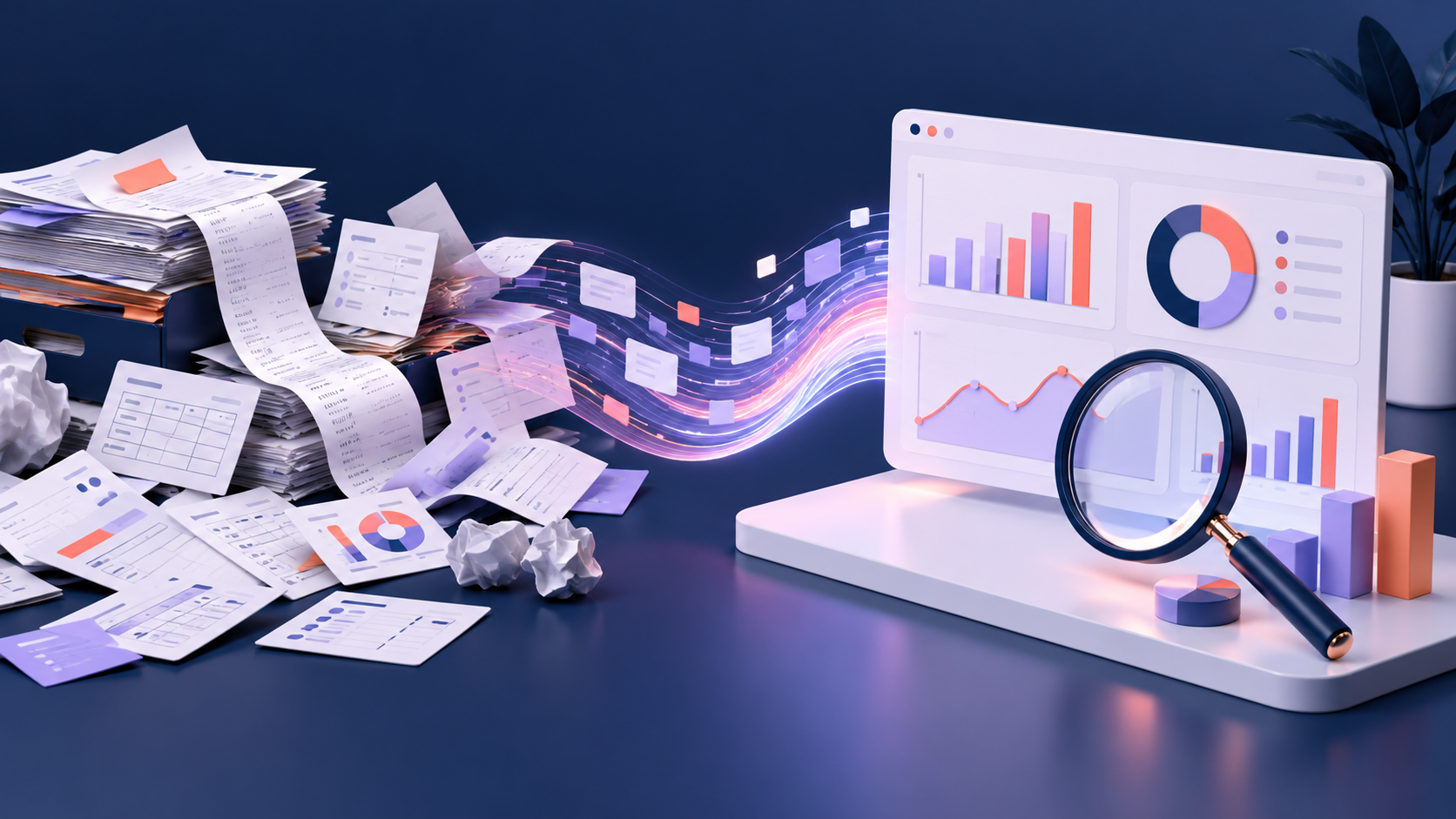
Data is only useful when it informs a decision
Most small businesses are sitting on a goldmine of information. Sales records, website visits, customer emails, appointment logs, social media statistics and invoices pile up every day. The problem is that collecting data and using data are two very different things.
If your numbers live in scattered spreadsheets that nobody reviews, you are doing the work of data collection without getting the reward. This guide explains why small businesses need data analysis, not just data collection, and how to start turning raw numbers into useful action.
Data collection vs. data analysis: what is the difference?
Data collection is the process of gathering information: recording sales, tracking website traffic, storing customer details and logging expenses.
Data analysis is the process of cleaning, organising and interpreting that information to find patterns, answer questions and guide decisions. Data collection fills the warehouse; data analysis tells you what is inside and what to do with it.
The problem with collecting data without analysing it
Many small business owners track plenty of numbers but rarely act on them. This can lead to several costly problems:
- Missed opportunities: trends in customer behaviour, seasonal demand or best-selling products go unnoticed.
- Wasted time and money: information is gathered but never influences a decision.
- Guesswork instead of strategy: decisions are based on instinct rather than evidence.
- Hidden problems: rising costs, declining sales or customer drop-off can grow quietly until they become serious.
Six reasons small businesses need data analysis
1. Smarter, data-driven decisions: analysis replaces guesswork with evidence so you can choose which products, services or channels deserve attention.
2. Lower costs and less waste: reviewing expenses and operations can reveal underperforming campaigns, unnecessary subscriptions and inefficient processes.
3. A deeper understanding of customers: customer data can uncover buying patterns, preferences and valuable segments.
4. Better marketing results: analysis shows which channels bring real customers and which only bring clicks.
5. Early warning and forecasting: spotting trends early helps you prepare for busy seasons, inventory changes or dips in sales.
6. A competitive edge: affordable tools and remote data analysis services give small businesses access to practical business intelligence.
Key metrics every small business should track
You do not need to track everything. Start with a few key performance indicators that match your goals:
- Revenue and profit margin
- Customer acquisition cost
- Customer retention rate
- Website traffic and conversion rate
- Average order value or appointment volume
- Operating expenses
How to move from data collection to data analysis
- Define your questions, such as why sales dropped or which service is most profitable.
- Clean your data by removing duplicates, fixing errors and standardising formats.
- Use the right tools. Excel, Google Sheets, Power BI and Looker Studio can turn numbers into clear visuals.
- Look for patterns by comparing time periods, customer groups and products.
- Turn insights into action with clear next steps.
- Review regularly with monthly or quarterly check-ins.
Why remote data analysis makes sense for small businesses
Hiring a full-time data analyst is often out of reach for a small business. Remote data analysis offers a practical alternative: an experienced analyst can clean data, build reports and dashboards, and explain the results in plain language around the support you need.
This is especially useful for clinics and service businesses, where analysing appointment trends, patient flow or billing data can improve efficiency and reduce administrative costs.
Final thoughts
Data collection is only the first step. The real value comes when you analyse your information, understand what it means and act on it. Small businesses that make this shift can make better decisions, waste less and grow with greater clarity.
Contact Vitekni to discuss how reporting and analytics support could help your business make smarter decisions.