25 Virtual Assistant Tasks Small Businesses Can Outsource to Save Time
Discover 25 virtual assistant tasks small businesses can outsource, from administrative support and customer service to research, reporting and social media management.
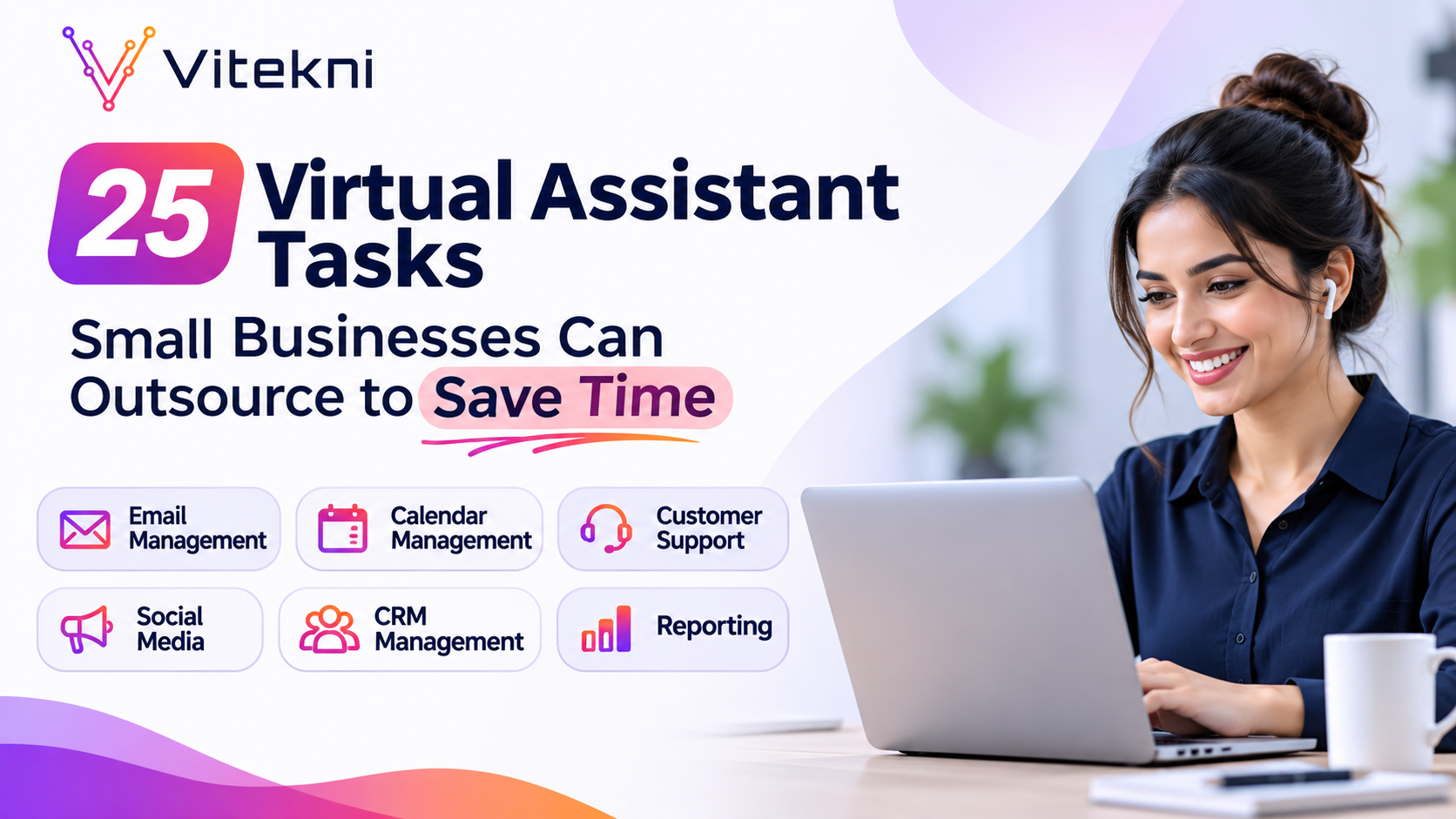
What can a virtual assistant do?
Running a small business involves much more than delivering products or services. Between managing emails, coordinating schedules, responding to customers and keeping business records organised, everyday responsibilities can quickly consume the time you need for more important work.
A virtual assistant provides remote administrative, operational or customer-facing support, allowing business owners and teams to delegate recurring responsibilities without hiring someone for every individual task. From managing your inbox to preparing reports and coordinating customer enquiries, there are many virtual assistant tasks that can help your business operate more efficiently.
1. Administrative and Organisational Tasks
Administrative work is often one of the easiest areas to start outsourcing because these responsibilities are recurring, process-driven and straightforward to document.
- Email and inbox management: organise messages, identify priorities and prepare drafts using your guidelines.
- Calendar management: coordinate appointments, invitations and scheduling conflicts.
- Document formatting: format Word documents, spreadsheets and presentations using preferred templates.
- Data entry and record updates: enter information, update records and organise digital files.
- Meeting coordination: manage schedules, invitations, documents and action-item summaries.
2. Customer Support Tasks
Customer communication is essential for trust, but routine enquiries can become difficult to manage as a business grows.
- Email customer support using approved templates and escalation procedures.
- Live chat support according to agreed coverage and service requirements.
- Customer enquiry management, including collecting information and routing requests.
- Ticket management, including categorisation, status updates and documented interactions.
3. Research and Data Management Tasks
Research and information management can take considerable time when businesses need reliable information for decisions.
- Market research using publicly available industry and product information.
- Competitor research covering public services, messaging, pricing and product features.
- Spreadsheet management in Excel and Google Sheets using existing formulas and templates.
- Data collection and organisation across documents, platforms and records.
4. Reporting and Performance Monitoring Tasks
Businesses need reliable information to understand performance and identify areas requiring attention.
- KPI report preparation using supplied metrics and definitions.
- Excel dashboards and reports, including formulas, charts and recurring summaries.
- Call centre and customer support reporting covering available call volumes, missed calls, satisfaction, ticket and quality data.
5. Social Media Management Tasks
Social media responsibilities can be delegated while your business retains control of its brand and approvals.
- Social media content calendar management based on approved topics and publishing schedules.
- Social media post scheduling using supported tools after content is approved.
- Comments and direct-message management using communication guidelines, with sensitive enquiries escalated.
6. CRM and Business Operations Tasks
CRM systems need regular maintenance to remain useful and consistent.
- CRM record updates and contact organisation.
- Follow-up coordination using reminders and approved instructions.
- Workflow documentation and step-by-step process records.
7. Healthcare Administrative Tasks
Healthcare administrative work must follow practice policies, access permissions and applicable privacy requirements.
- Medical appointment scheduling and routine appointment information.
- Patient enquiry management, with clinical questions escalated to qualified healthcare professionals.
- Patient records and administrative updates using approved systems and access permissions.
What tasks should you not outsource?
The goal is not to outsource everything. Keep strategic decisions, financial approvals, sensitive employee decisions, legal advice and specialist responsibilities requiring qualifications under appropriate direct control.
How to decide which tasks to outsource first
Start by reviewing weekly responsibilities and identify recurring tasks that consume time, can be documented and have clear outcomes. Establish access permissions and responsibilities, then begin with a manageable scope and review the arrangement as your needs evolve.
- Identify recurring tasks.
- Identify tasks that consume too much time.
- Check whether the task can be documented.
- Establish access and responsibilities.
- Start with a manageable scope.
Frequently Asked Questions
A virtual assistant can support administrative work, inbox management, calendar coordination, customer enquiries, data entry, research, CRM updates, reporting and other recurring operational responsibilities. The exact tasks depend on skills and the agreed scope.
It can be worthwhile when recurring work consumes time better spent on higher-priority activities. Start with repetitive tasks that have clear instructions and establish communication, access and performance expectations.
Final Thoughts
Running a small business does not mean you need to manage every responsibility yourself. From administrative coordination and customer support to reporting and social media management, suitable tasks can be delegated to create more time for work that requires your attention.
At Vitekni, we provide flexible virtual assistance and business support services designed around your workflows and priorities. Explore our services or get in touch to discuss the support your business needs.